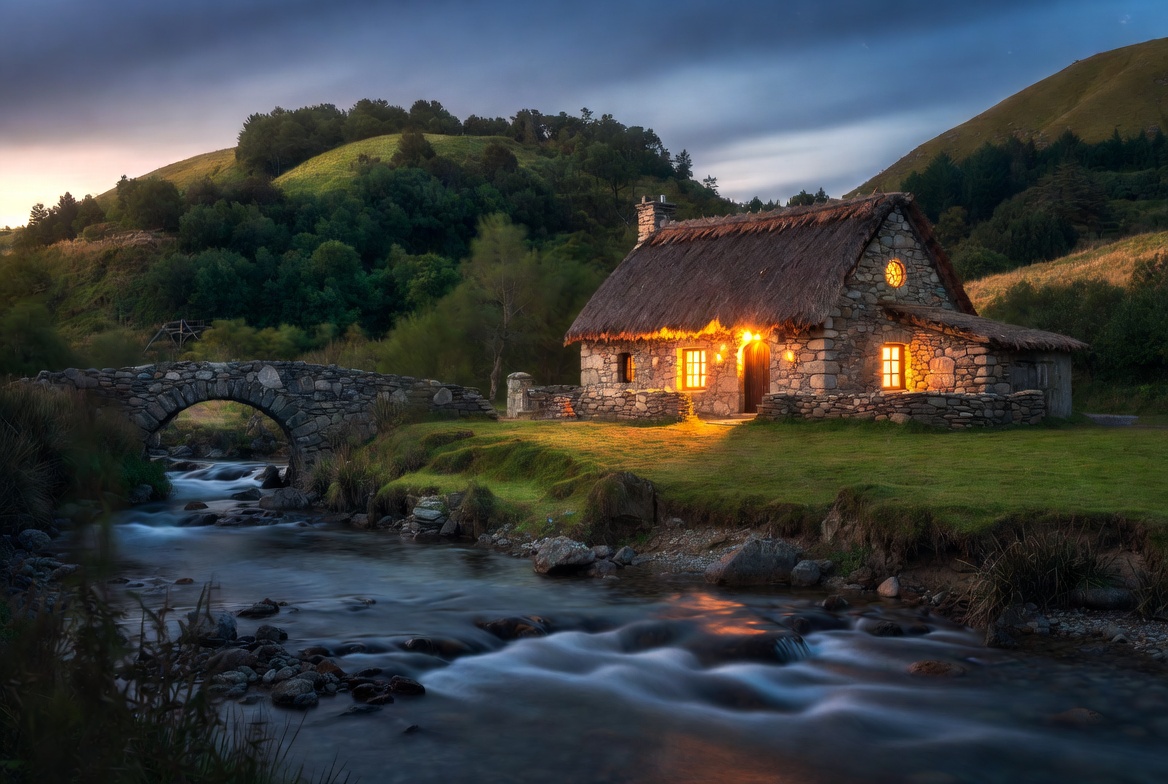
Almost a decade after filming wrapped, the crew came back. This time, they didn’t build a set. They built a village.
By 2009, the second film trilogy was in pre-production and the location problem had a familiar answer: return to Matamata. The original Hobbiton was, by then, half a ruin and half a tourist attraction. A small operation had been running informal walking tours since 2002, drawing visitors who didn’t seem to mind that most of the doors led to nothing.
The decision the new production made was the unexpected one. Instead of rebuilding the temporary set, they would build a permanent one — in stone, brick, and timber. Forty-four hobbit holes this time. Real foundations. Real chimneys. A roof on the Mill that wasn’t going to blow off in a Waikato gale.
The Green Dragon, finally with a roof
The most visible addition was the Green Dragon Inn. In the first trilogy, the inn had been only a façade — a face on the world, with nothing behind it. The new build made it a working tavern. Stone walls. A thatched roof. A working bar that, today, still serves an ale brewed for the place.
The Mill was rebuilt in the same spirit. So was the bridge across the stream, the round chimneys above Bagshot Row, and the formal garden of Bag End at the top of the hill.
“This time we built it to outlast us. The lichens on the stones are real. The vegetable gardens are tended. The whole valley is a working set, not a backdrop.”
From location to landmark
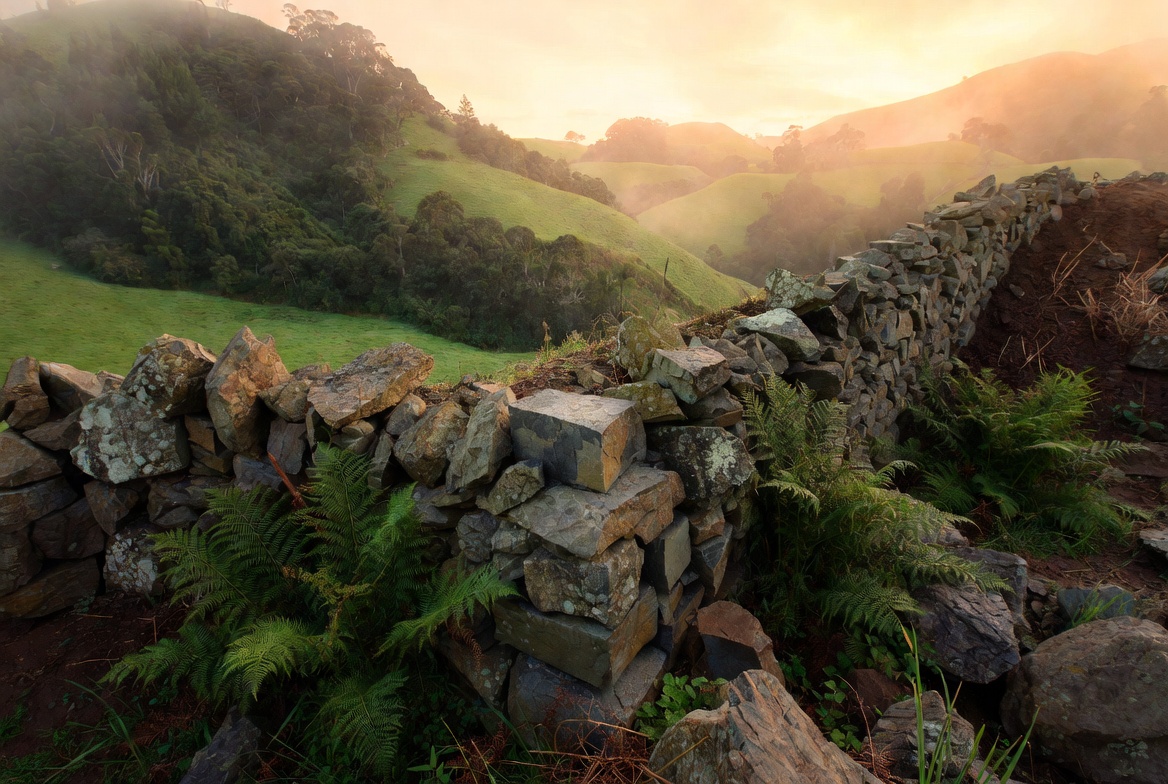
When the second trilogy finished filming, the set didn’t come down. By prior agreement, it stayed. What had begun in 1998 as a temporary lease over a working farm had become, in 2011, a permanent piece of New Zealand’s cultural geography — an open-air museum of a place that doesn’t, technically, exist.
That’s where the story sits today: a village in the Waikato that was built twice, taken down once, and left standing. The land underneath is still a farm.