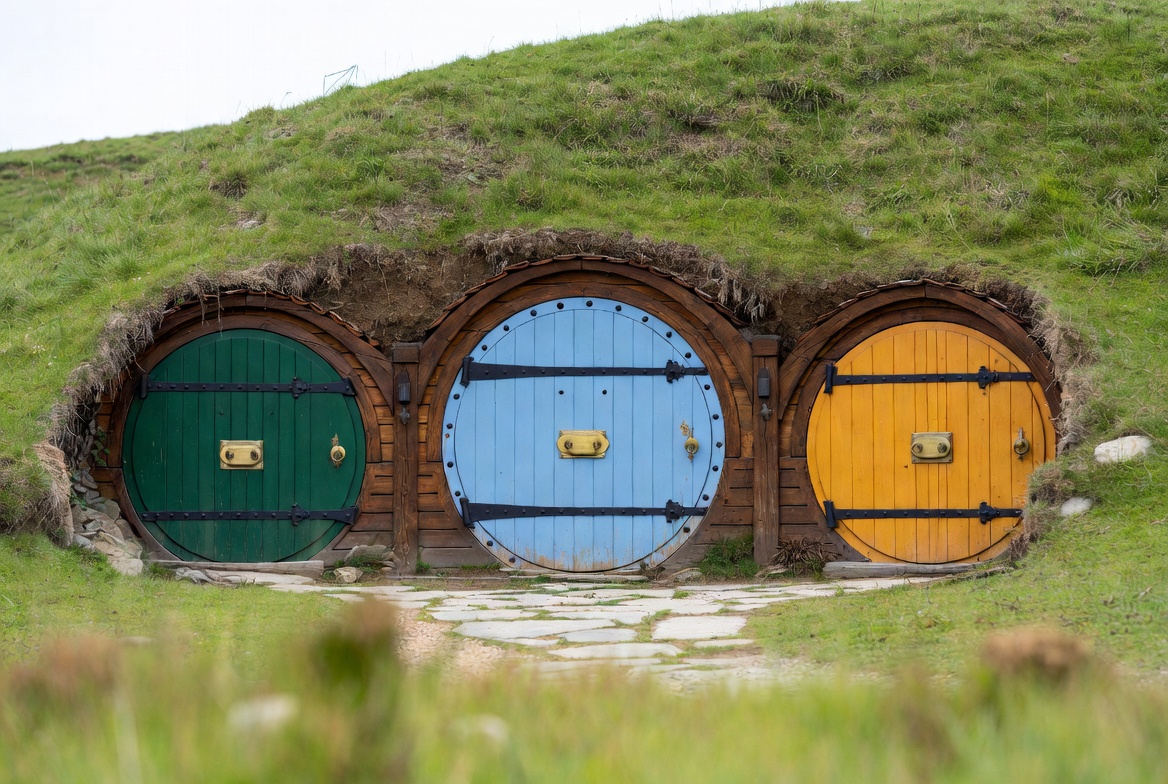
First a road. Then a village. Then a year of waiting for the gardens to grow in. The making of the Shire was less film magic than slow agriculture.
Once the lease was signed in 1998, the construction problem became blunt. The valley the scouts had loved had no vehicle access. No road meant no diggers. No diggers meant no village.
The solution came from an unlikely partner. The New Zealand Army’s engineering corps was offered the job and took it: cutting a 1.5-kilometre access road into the property as a training exercise. Soldiers who’d never read Tolkien spent weeks moving earth so that, eventually, a hobbit’s front door could be photographed without a forklift in the background.
The hill, and the things stuck into it
For the first films, 39 hobbit-hole façades were built into the south-facing slope of the central hill. The set was always meant to be temporary. Construction was wood and polystyrene, painted and weathered, with round doors that mostly didn’t open onto anything — a hobbit hole on a film set is, structurally, a dressed wall.
Bag End sat at the top of the hill, pegged out where Frodo’s view of the village would later become one of the most-photographed shots in the trilogy. The Party Tree — that single Monterey pine the scouts had spotted from the air — needed nothing done to it.
“They planted the cabbages a year before we shot. Real cabbages. They had to be old cabbages on the day.”
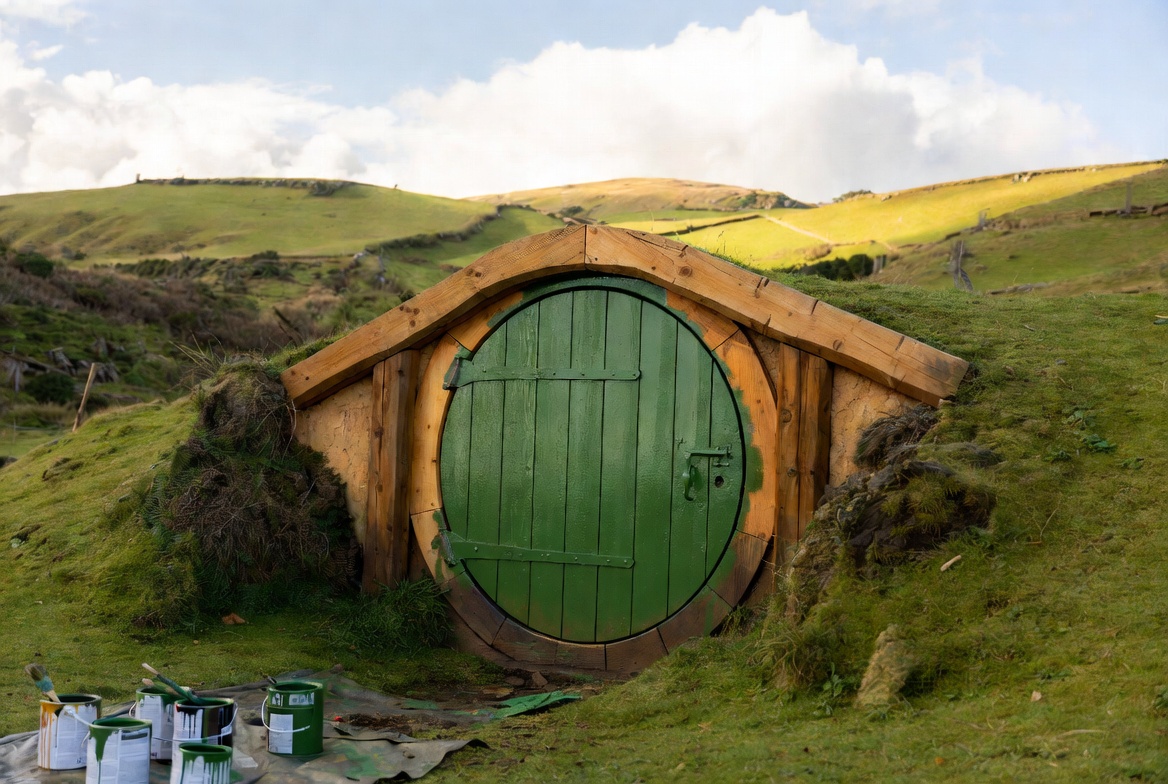
Patience as a special effect
The detail that gives Hobbiton its uncanny realism on screen is also the most boring one to describe: time. Hedges, lichens, vegetable gardens, fruit on trees — all of it was planted a full year before filming began so that, on camera, nothing would look new. Crews tended the gardens through the seasons. Lichen was encouraged on stone walls. Where a film set usually fakes age with paint, this one used soil.
By late 1999, the village was indistinguishable from a place that had been lived in for generations. The cameras were ready.